Insufficient recovery time
Do you feel as though you never really get a chance to catch your breath? Perhaps you’re constantly moving from work to family, from appointments to household chores, and from worrying to sleep. There’s always something that needs doing. Without recovery time, your body or mind cannot properly recharge. You often only realise this once the fatigue has built up. Recovery is not a luxury. It is essential for you to be able to keep functioning. Without recovery, everything becomes more difficult: work, socialising, exercise, sleep and coping with health issues. Insufficient recovery time can therefore have a significant impact on your health.
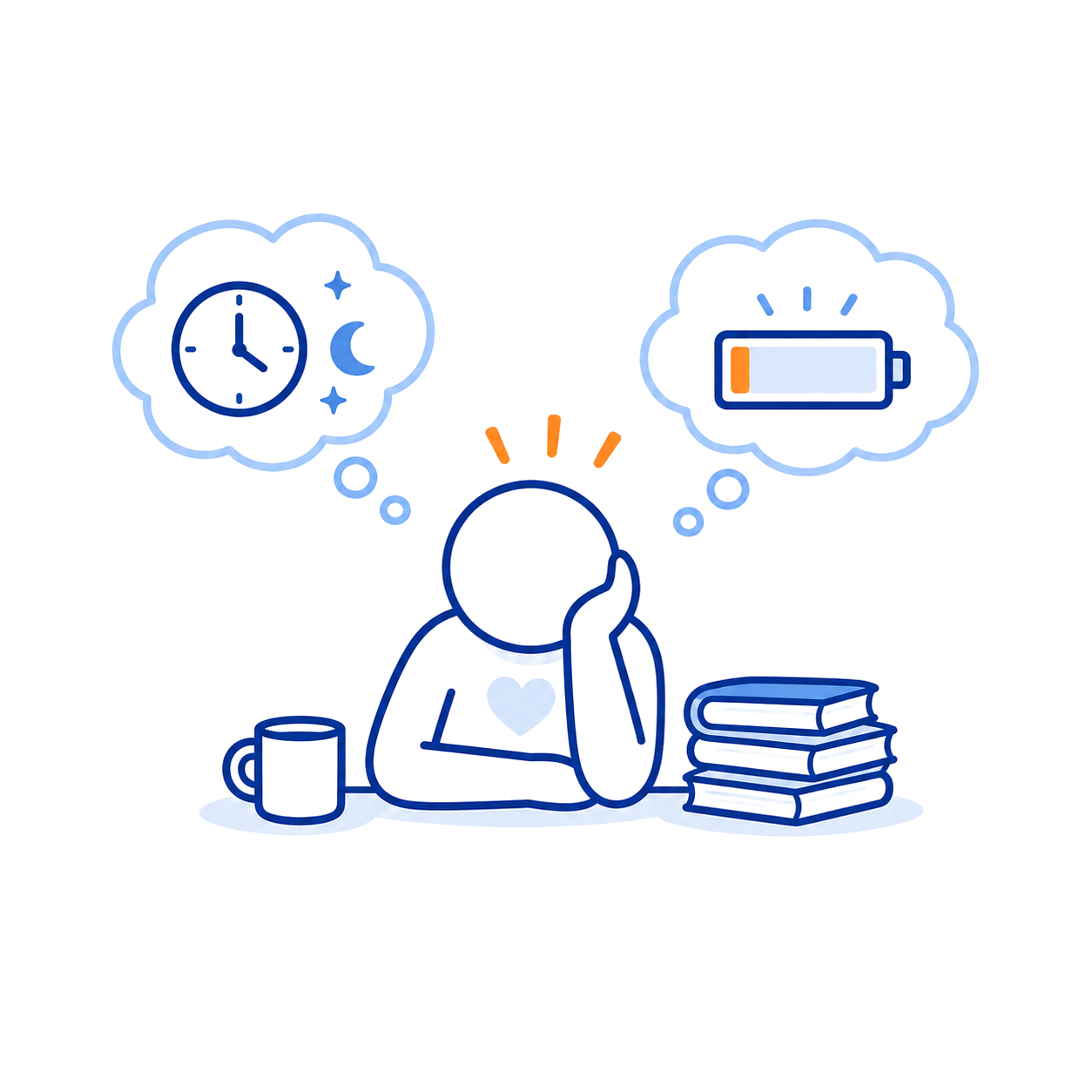
What do you notice?
Insufficient recovery time can develop gradually.
You may, for example, notice that:
- when you wake up;
- you have little energy after work or study;
- you are more easily irritated;
- you sleep less well;
- if you feel more pain or tension;
- you have difficulty concentrating;
- you feel you have no space for yourself;
- you use your free time to catch up on work;
- you are finding it less and less enjoyable.
Sometimes taking a break seems impossible, because there is simply too much to do. Yet it is precisely at such times that recovery is important.
What might be the reason for this?
Insufficient recovery time is often caused by a busy schedule, high expectations or numerous responsibilities. Work, family, informal care, household chores and social commitments can all pile up.
Difficulty setting boundaries may also be a factor. You may often say yes, take on extra tasks or feel guilty when you take time to rest.
In addition, stress can mean that rest no longer feels like rest. You may be sitting still, but your mind remains active. As a result, you do not recover as well.
What can you do yourself?
It helps to plan your recovery consciously. Don’t wait until everything is ready, because often nothing is ever quite ready.
For example, you could:
- spread short recovery breaks throughout the day;
- taking a deliberate break after strenuous tasks;
- keep your diary less full;
- allocate or postpone tasks;
- reduce screen time before bed;
- do something relaxing every day;
- discuss boundaries with those around you;
- Take a rest before you become exhausted.
Recovery doesn’t always have to take a long time. Even small moments can help if you take them at the right time.
When is it advisable to seek help?
It is wise to seek help if you remain tired for a long time or are no longer recovering properly. It is also a good idea to seek advice if you keep carrying on despite your symptoms getting worse.
Please also seek help if taking a break makes you feel guilty or if you’re unsure how to make time in your day. In such cases, more is often needed than just a tip on how to relax better.
How Rondom can help
Together, we’ll look at where your recovery time is going and what you need to recharge more effectively. In doing so, we’ll focus on energy, tasks, sleep, stress and boundaries.
A occupational therapist can help to distribute the workload and recovery time more evenly. A lifestyle coach can help with sleep, daily routines and healthy habits. In cases of stress, worrying or feelings of guilt, it can psychological support should be appropriate.
We are looking for practical ways to make recovery a regular part of your day again.
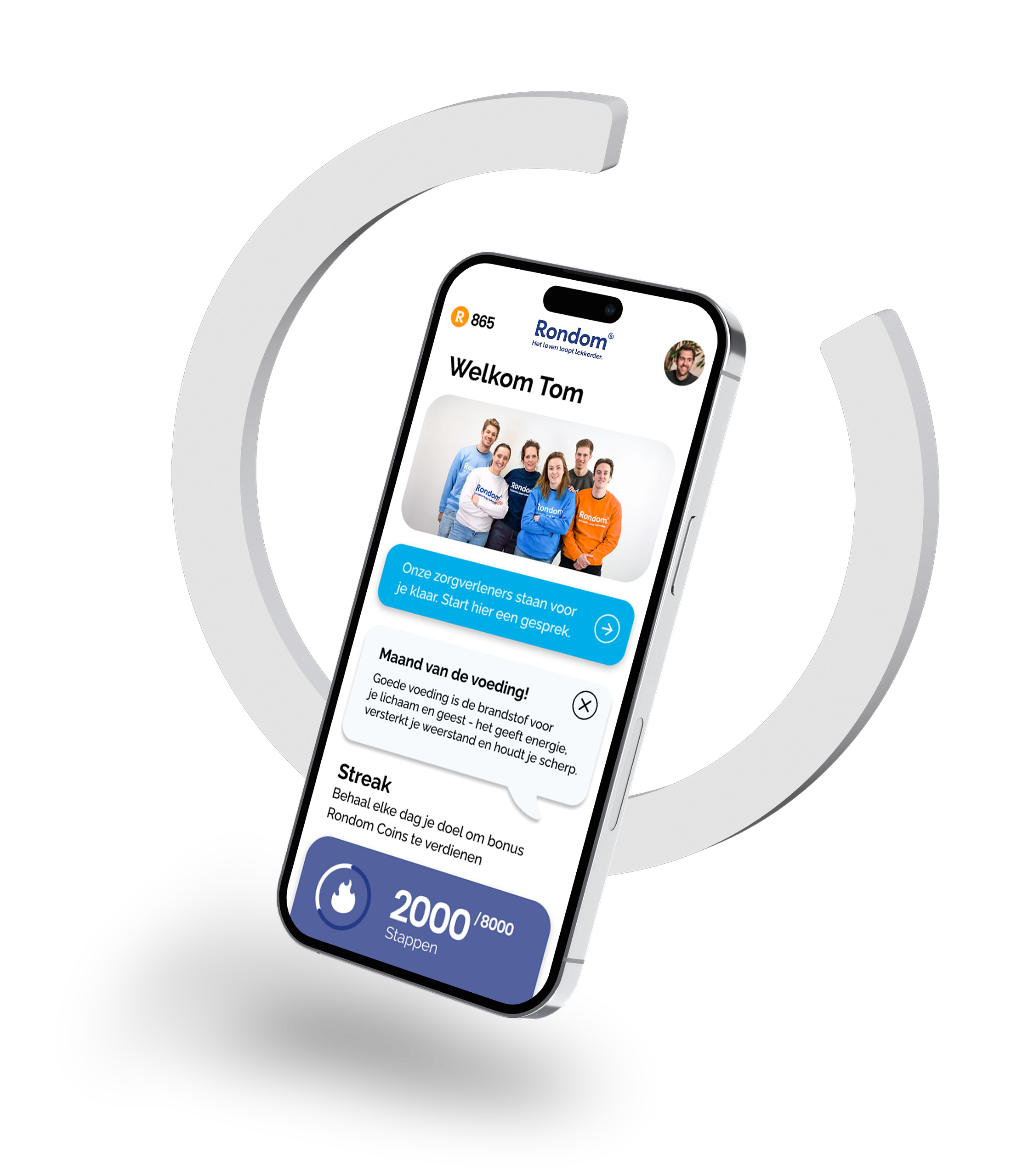
Work on your health with the Rondom app
- Direct contact with healthcare professionals via chat
- A community where you share experiences and motivate one another
- Personal challenges that match your goals
- Step counter for your daily exercise
- Earn points for healthy choices
- Articles, videos, recipes and assignments
- Register for (online) events