Difficulty with washing and showering
Have you noticed that washing or showering takes more effort than it used to? Perhaps you feel tired after a shower, even before the day has properly begun. Or maybe you put it off because you dread standing up, drying off or getting dressed. That can feel frustrating, especially when something that always came naturally suddenly requires a lot of energy. Difficulty with washing or showering can affect your daily routine, your independence and your self-esteem. Sometimes it’s down to pain or tiredness. Sometimes insecurity plays a part, for example due to a fear of slipping or falling. It’s important to take this seriously. There are often practical ways to make washing and showering safer and easier again.
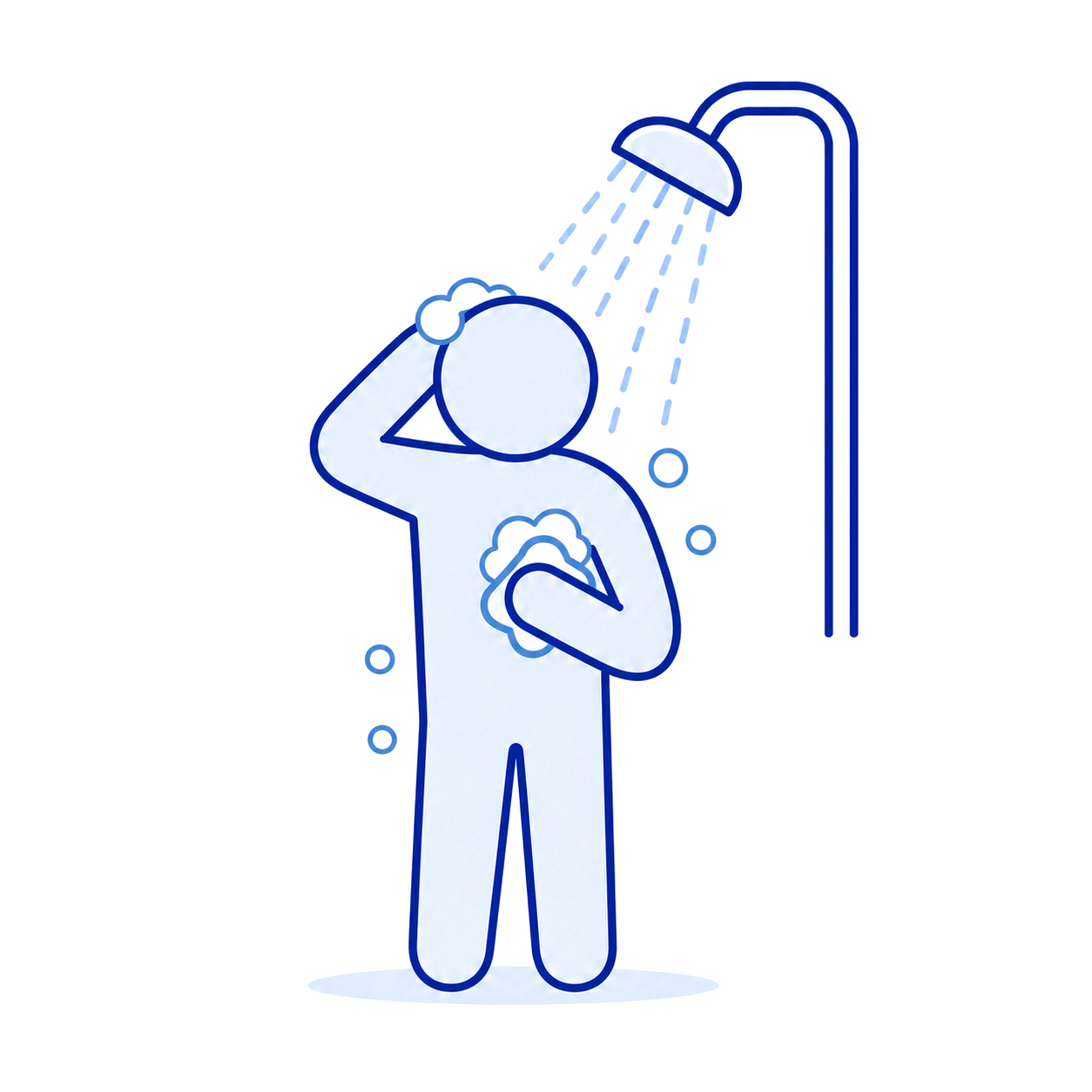
What do you notice?
Washing or showering can become difficult in various ways. For example, you may find that you get tired more quickly or that you need more help than you would like.
Common complaints include:
- difficulty standing for long periods in the shower;
- pain when bending over, turning or reaching;
- uncertainty when getting in and out of the shower;
- fear of slipping;
- difficulty washing or drying their hair;
- low energy after a shower;
- difficulty getting dressed after washing;
- need for help, whilst you would prefer to do this yourself.
Sometimes people adjust their behaviour without realising it. For example, you might shower less often or wash whilst sitting at the washbasin. Or you might only shower on days when you have little else to do.
What might be the reason for this?
Difficulty with washing or showering is often caused by a combination of factors. Pain, stiffness, tiredness or reduced strength can make everyday tasks more difficult. Balance issues, dizziness or a fear of falling can also play a part.
The bathroom can also make washing or showering more difficult. Think of a high threshold or a slippery floor. Few points of support or not enough space to move around comfortably.
Sometimes there is also mental strain involved. If you are feeling tense or low on energy, even a simple task such as having a shower can be quite a challenge.
So it need not be down to a single cause. That is precisely why it is important to pay attention to your body, your energy levels and the environment in which you wash or shower.
What can you do yourself?
You can often make small adjustments to make washing or showering easier. It helps to look not only at what you do, but also at when and how you do it.
For example, you could:
- take a shower at a time when you have the most energy;
- get everything ready in advance, such as a towel, clothes and toiletries;
- take your time and don’t rush;
- washing whilst sitting, as standing takes too much energy;
- use an anti-slip mat if the floor is slippery;
- provide sufficient support when getting in and out of the shower;
- Ventilate the bathroom properly, so that the heat feels less stifling;
- Plan a moment of relaxation after your shower.
It can also help to split tasks up. You don’t have to do everything one after the other. Sometimes it’s easier to spread out washing, getting dressed and doing your hair over several different times.
When is it advisable to seek help?
It is wise to seek help if washing or showering is becoming increasingly tiring, or if you find yourself avoiding washing or showering. It is also a good idea to seek advice if you are afraid of falling, experience pain whilst washing, or are becoming more dependent on others.
It’s best not to wait until something goes wrong. A fall in the bathroom can have serious consequences. It can also be frustrating if you find yourself needing more and more help, when simple adjustments might be all that’s needed.
Take your concerns seriously if you notice that washing or showering is affecting your independence, your daily routine or your sense of safety.
How Rondom can help
Together, we’ll look at what makes washing or showering difficult for you. This isn’t just about the bathroom, but also about your energy levels, your mobility and the things you’d like to continue doing for yourself.
A occupational therapist can work with you to find practical solutions. These might include using energy more efficiently, moving safely in the bathroom, assistive devices or minor adaptations to your home. If pain, fatigue or fitness levels are a major factor, other forms of support may also be appropriate. A physiotherapist can help with strength, balance and movement. A lifestyle coach can help with energy, recovery and daily routines.
We look for solutions that suit your situation. The aim is to make washing and showering safer, more relaxed and easier to manage again.
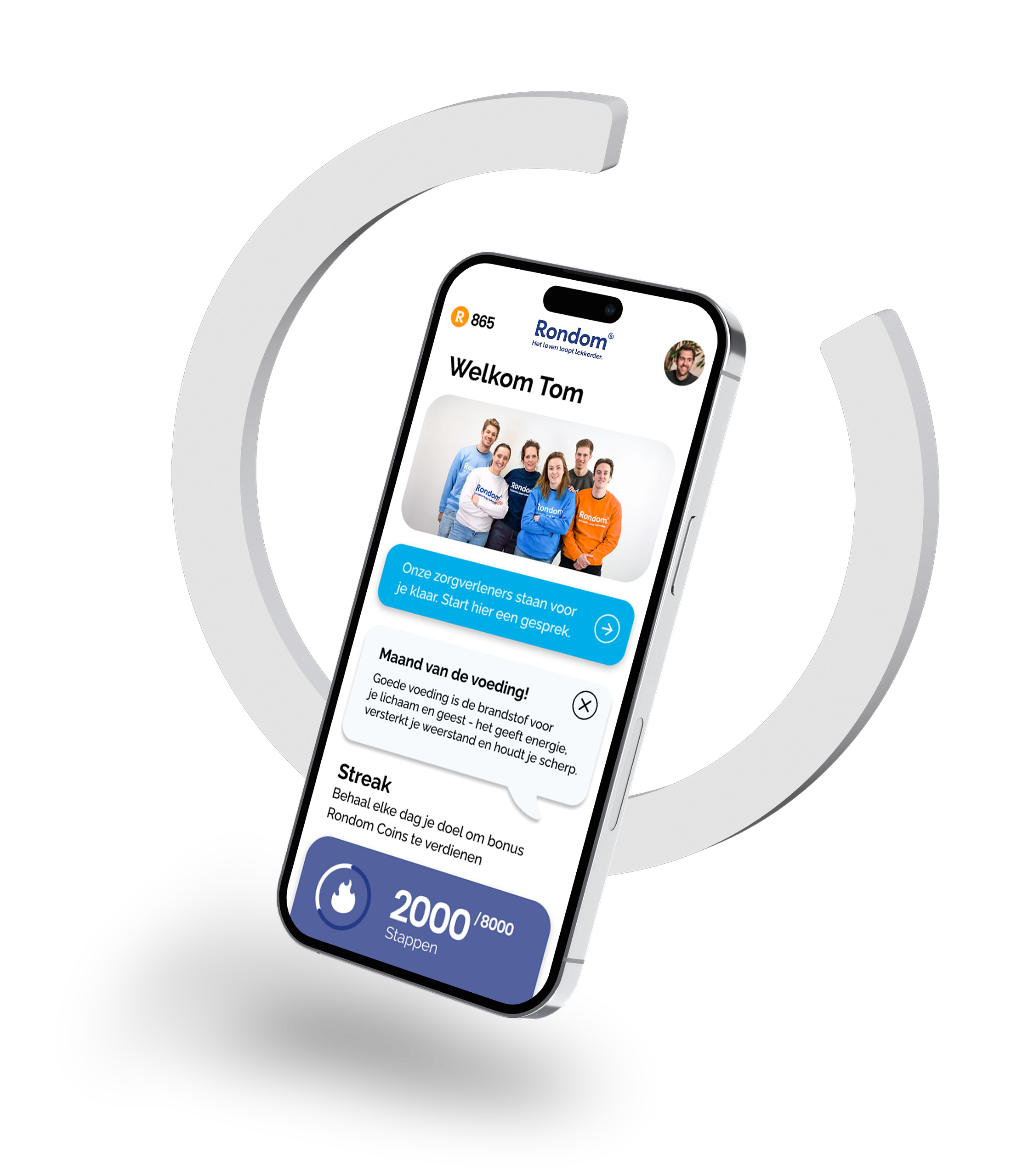
Work on your health with the Rondom app
- Direct contact with healthcare professionals via chat
- A community where you share experiences and motivate one another
- Personal challenges that match your goals
- Step counter for your daily exercise
- Earn points for healthy choices
- Articles, videos, recipes and assignments
- Register for (online) events