Difficulty concentrating
Have you noticed that concentrating is taking more effort than it used to? Perhaps you find yourself reading the same text several times. Or do you forget what you were just about to do, or get easily distracted by noise, notifications or conversations? This can be frustrating, especially if you’re used to being able to do lots of things at once. Concentration problems can affect your work, studies and home life. Tasks take longer, you make mistakes and your mind feels overwhelmed more quickly. People often try to try harder, but that doesn’t always help. Sometimes, what’s needed is actually peace and quiet, structure and fewer distractions.

What do you notice?
Concentration problems can manifest in very different ways. Sometimes it’s about maintaining focus. Sometimes it’s about getting started, switching tasks or finishing what you’ve started.
You may, for example, notice that:
- you are easily distracted;
- you have difficulty reading or listening;
- you forget what you were going to do;
- tasks take longer than usual;
- you are more likely to make mistakes;
- you find it difficult to multitask;
- if your head feels full or foggy;
- you feel very tired after tasks requiring concentration;
- you lose track of your appointments or deadlines.
Sometimes you can concentrate at the right moments, but not when you’re tired or have been exposed to a lot of stimuli. This variability can make you feel uncertain.
What could be the reason for this?
Concentration takes energy. If you’re not sleeping well, are in pain, feel tense or have a lot on your mind, you’ll have less capacity to maintain your focus.
External stimuli also play a part. Noise, hustle and bustle, notifications, conversations or a busy schedule can cause your mind to become overwhelmed more quickly. When recovering from illness, burnout, concussion or prolonged stress, your concentration may be temporarily impaired.
In addition, unclear tasks or trying to do too much at once can exacerbate the problem. Your mind then has to constantly switch gears, causing you to tire more quickly.
What can you do yourself?
It helps not to force concentration, but to protect it more effectively.
For example, you could:
- working in short blocks;
- plan some breaks before your head gets too full;
- temporarily disable notifications;
- Do one task at a time;
- break tasks down into small steps;
- working in a quiet place;
- tackle difficult tasks at the best time of your day;
- Do not overbook your diary.
Try also to take recovery periods seriously. Concentration often improves when your day is more restful and predictable.
When is it advisable to seek help?
It is wise to seek help if concentration problems are disrupting your work, studies or daily life. Even if this leads to you making mistakes, missing deadlines or experiencing a great deal of stress, it is a good idea to seek advice.
You should also seek help if you experience concentration problems following an illness, an accident or a period of prolonged stress. In such cases, support can help you to gradually get back on your feet.
How Rondom can help
Together, we’ll look at when it becomes difficult to concentrate and what your mind needs to function better. In doing so, we’ll focus on stimuli, energy, planning, recovery and task organisation.
A occupational therapist can help with structure, stimulating the senses and building concentration. In cases of stress, worrying or mental strain, it can psychological support should be appropriate. A lifestyle coach can help with sleep, recovery and rhythm.
We are looking for practical ways to help you manage your time more effectively and make your day more organised.
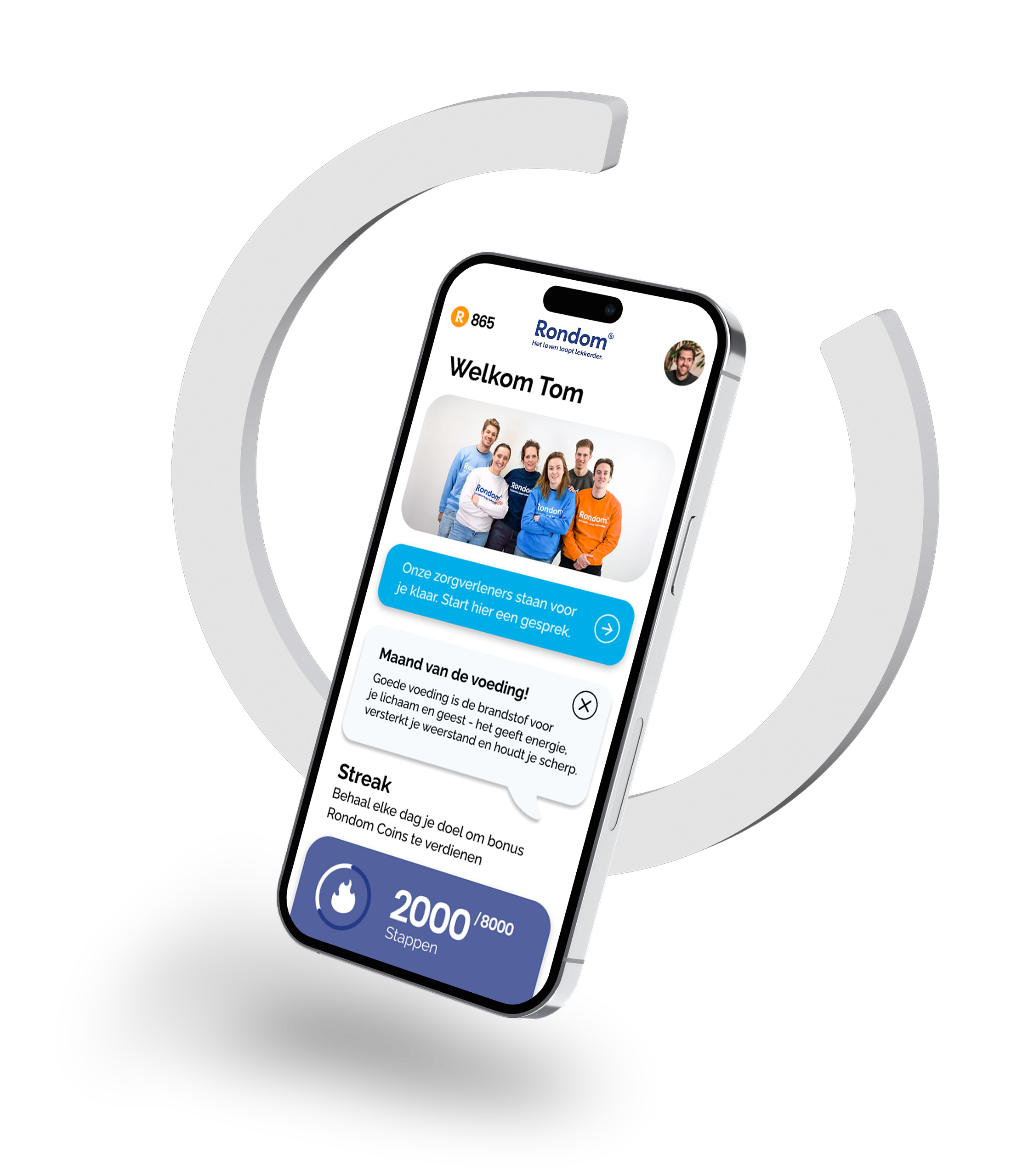
Work on your health with the Rondom app
- Direct contact with healthcare professionals via chat
- A community where you share experiences and motivate one another
- Personal challenges that match your goals
- Step counter for your daily exercise
- Earn points for healthy choices
- Articles, videos, recipes and assignments
- Register for (online) events