Cycling
Have you noticed that cycling isn’t as easy as it used to be? Perhaps you feel unsteady when getting on your bike, experience pain whilst cycling, or feel anxious in traffic. Cycling offers a great deal of freedom. You can go where you like, get some exercise outdoors and are less dependent on others. If cycling becomes more difficult, it can have a significant impact on your daily life. Cycling requires balance, strength, reaction time, situational awareness and confidence. The bike itself must also fit you properly. If any one of these things changes, cycling can become stressful or difficult.
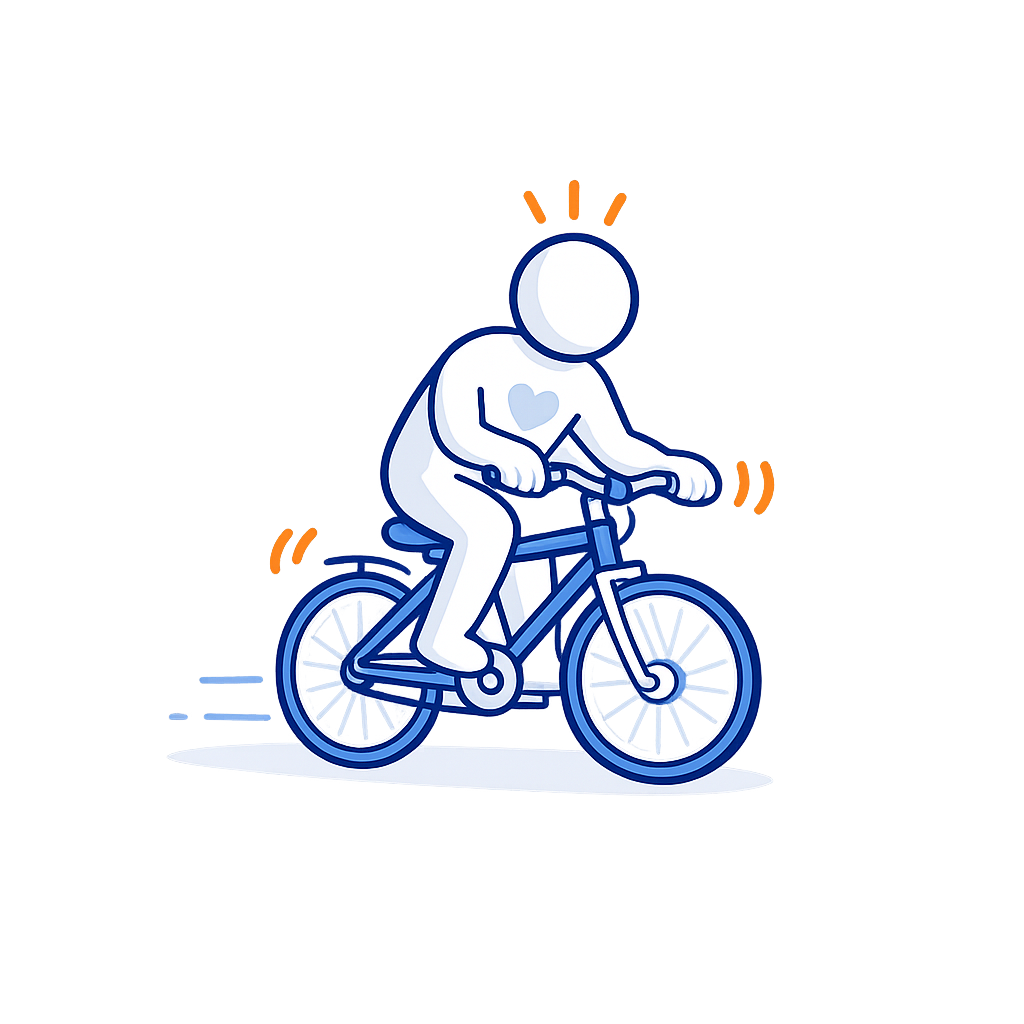
What do you notice?
Difficulties with cycling can arise at various times: when getting on, riding, braking, getting off or taking part in traffic.
You may, for example, notice that:
- getting on or off is difficult;
- you feel unsteady when cornering;
- you experience pain in your back, knees, hips, neck or hands;
- you get tired more quickly;
- you are afraid in heavy traffic;
- if you have difficulty checking or replying;
- you cycle less often;
- if you have any symptoms after cycling;
- you have ever fallen off your bike;
- You’re not sure whether cycling is still safe.
Sometimes you avoid cycling without really discussing it. This can make your world feel smaller.
What might be the reason for this?
Cycling can become more difficult due to pain, reduced strength, balance problems, tiredness or a lack of confidence. Impaired vision, dizziness or slower reactions can also have an impact.
In addition, the bike may not be a good fit. A high frame, incorrect saddle height, heavy handlebars or poor support can make cycling unnecessarily difficult.
Traffic and the surrounding environment also play a part. Busy junctions, narrow cycle paths, wind, rain or uneven roads can cause stress.
What can you do yourself?
It helps to identify exactly what makes cycling difficult and to make small adjustments accordingly.
For example, you could:
- practise in a quiet place;
- choose short routes;
- avoid heavy traffic;
- have your bike properly adjusted;
- gradually increasing the distance;
- take breaks;
- consider a low-step bicycle;
- to ask someone to come cycling with you.
Also consider safety. A helmet, good lighting and a route with little traffic can give you more confidence.
When is it advisable to seek help?
It is wise to seek help if you are unsure whether cycling is safe. Advice is also useful if you experience pain, feel uncertain or find yourself avoiding cycling more and more.
Please contact us if you feel dizzy, faint, suddenly lose strength or have difficulty seeing.
How Rondom can help
Together, we’ll look at what makes cycling difficult. In doing so, we’ll focus on balance, strength, pain, energy, cycling habits and confidence.
A occupational therapist can offer advice on cycling safety, routes, aids and adaptations. There are often alternatives available on the market, such as tricycles or tandems. A physiotherapist can help with balance, strength and fitness. A podiatrist can help determine whether foot position, footwear or gait affect symptoms.
Together, we are looking for a way to make cycling feel safer and more enjoyable again.
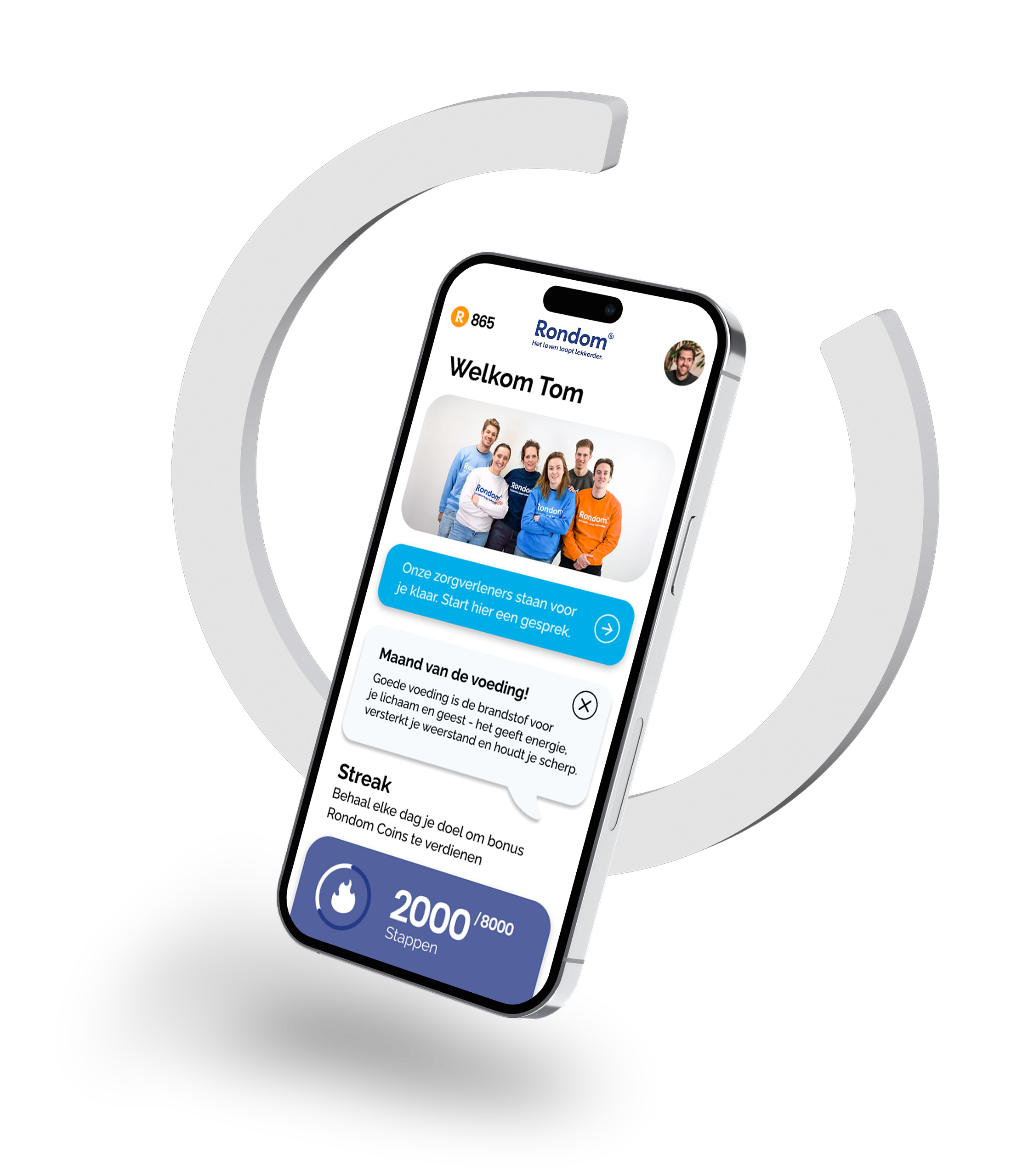
Work on your health with the Rondom app
- Direct contact with healthcare professionals via chat
- A community where you share experiences and motivate one another
- Personal challenges that match your goals
- Step counter for your daily exercise
- Earn points for healthy choices
- Articles, videos, recipes and assignments
- Register for (online) events